Striving to Boost Recycling Efforts, Other News from Sen. Blakespear
Greetings!
Much is made of the differences between California and Texas – political‚ economic‚ social‚ cultural. But while we may have different values or ways of doing things‚ we often have similar goals and things in common.
I’m a pragmatist. I want government to be efficient and effective at what it does. I want business to be supported and successful. And‚ as a committed environmentalist‚ I want to know how we can better meet our recycling and waste diversion goals.
That’s why I was happy this month to take a trip to Texas organized by the nonprofit group California Foundation on the Environment and the Economy (CFEE) to see how the Lone Star State is pushing recycling and sustainability efforts.
We covered a lot of ground ‑ visiting paper‚ plastic and chemical recycling facilities in Austin‚ Houston and Dallas‚ and hearing from businesses and thought leaders about the differences between the way the two states permit and operate. It was very useful.
One of my key takeaways is that in order for recycling to work there have to be businesses willing to buy recycled material to turn into new products. These business decisions come down to cost‚ quality and convenience.
I’m always impressed with the ingenuity in the private sector‚ and the creativity that emerges in the ecosystem of trying to create a circular economy for our waste stream.
There is much work to do as we move toward a truly circular economy‚ a goal we should continue to aim for with best practices from wherever we find them.

I visited the Dallas plant (above) of Smurfit Westrock‚ the world’s largest paper and packaging company‚ which turns 100 percent recycled fiber into coated recycled paperboard for folding cartons and packaging.
You can see a video of my tour on my Instagram page.
Supporting UC Climate Research

This week I joined former Gov. Gray Davis‚ Senate President Pro Tem Monique Limón‚ Sens. Ben Allen and Henry Stern‚ and Assemblymembers Jackie Irwin and Gregg Hart for a roundtable discussion at UC Santa Barbara with UC researchers and academics working on climate solutions.
California has been at the forefront of addressing climate change for decades. As we work to reduce our carbon emissions and adapt to the impacts of climate change‚ we must understand what is happening and how to react.
That makes it essential for us to encourage and support ongoing scientific research on related issues – to improve water management‚ wildlife resilience‚ carbon removal‚ climate and weather forecasting and erosion resistance.
Thankfully‚ California is home to the world’s premier public higher education system‚ the University of California‚ which year in and year out produces cutting‑edge research.
State lawmakers this week gathered with government and university leaders to discuss how to optimize climate research and tackle the challenges ahead. With the federal government significantly cutting money for research and ending federal climate change initiatives‚ it is more important than ever that California maintains its strong global leadership in this area.

Headlines like this‚ in the New York Times‚ announced the federal government’s backtracking on wildlife protection.
In California‚ we have a long history of appreciating‚ respecting and protecting our state’s wildlife and environment.
So‚ I find it heartbreaking that the federal government has weakened protections for wildlife in order to open up critical habitat areas to commercial interests‚ including oil drilling‚ mining and real estate development.
Not only is this bad public policy‚ but it is policy the public doesn’t want. According to an analysis by the New York Times‚ about 99 percent of the public comments on the rule change received by the federal government was against the change. Read more in this story.
Focusing on E‑bike Safety in Orange County

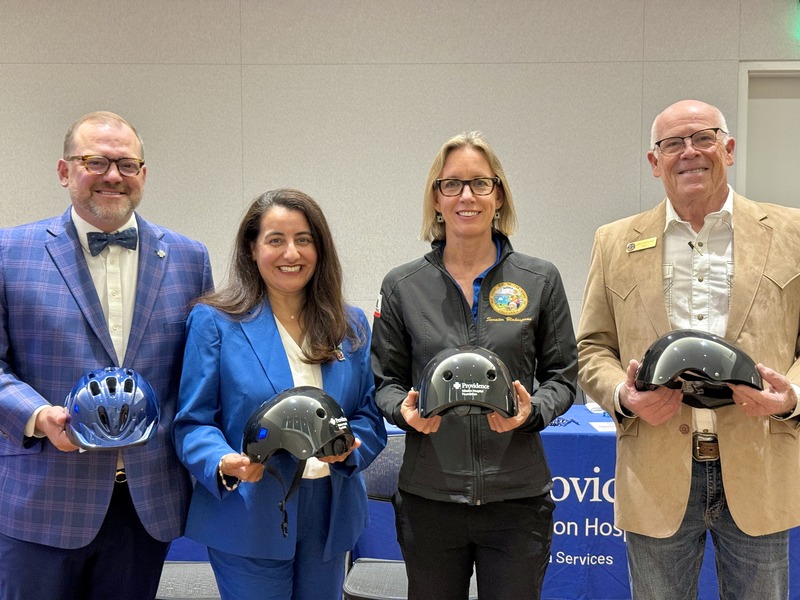
At the event with (left to right)‚ Providence Mission Hospital CEO Seth R. Teigen‚ Senate President Pro Tem Monique Limón and San Juan Capistrano Mayor John Campbell.
I was delighted to hold a town hall meeting on e‑bike safety at the San Juan Capistrano Community Center this week. Much thanks to the California Highway Patrol‚ City of San Juan Capistrano‚ Orange County Sheriff’s Department and Capistrano Unified School District for participating and helping to make this event happen.
Even Senate President Pro Tem Monique Limón – the leader of the State Senate ‑ joined the event and affirmed that the Legislature is working on the concerns with e‑bikes and safety in our community.
Over the last several years‚ the explosive growth of e‑bikes has changed the dynamics around bicycling and cycle safety in communities across California. While e‑bikes have expanded transportation options for all people‚ especially youths‚ they’ve also introduced new safety challenges.
Today’s e‑bikes — and especially products marketed as e‑bikes that are actually closer to motorcycles — are often much faster and more powerful than many people realize. That has led to a rise in injuries and traffic safety problems.
People often ask me why California doesn’t simply ban e‑bikes for kids. It’s a fair question. But e‑bikes remain an important mobility tool that helps many young people get to school‚ work and activities‚ and there is no one‑size‑fits‑all solution for a state as diverse as California.
That’s why I authored Senate Bill 1167‚ which strengthens consumer protections by requiring products to be accurately labeled and marketed. The bill ensures that only vehicles meeting California’s e‑bike standards can be marketed as e‑bikes and requires clear labeling of other motorized vehicles.
It also requires manufacturers and sellers to disclose if a device is not an e‑bike‚ and therefore must have a vehicle registration and rider license to operate. The bill standardizes the placement of e‑bike labels so they are easily visible‚ requires label information to be included in law enforcement incident reports‚ and prevents unauthorized high‑speed motor vehicles from being used on public roads unless they meet applicable requirements.
Working to Stop Human Trafficking

I convened a panel discussion on human trafficking that included (left photo‚ left to right) Marjorie Saylor‚ of One Safe Place; Geanie Franco‚ of the California Department of Justice; and Summer Stephan‚ the San Diego County District Attorney. I was also glad to meet people providing information and resources for attendees at tables (right photo).
Human trafficking is a major problem in San Diego County and across the country‚ and that’s why I held a panel discussion at the University of San Diego on how to recognize it and prevent it from happening.
On July 16‚ over 120 people attended my Human Trafficking: Prevent and Protect panel at the USD’s Kroc School of Peace Studies. Our incredibly knowledgeable panelists included San Diego County DA Summer Stephan; Geanie Franco‚ California Department of Justice Special Agent in Charge and Human Trafficking Program Manager; Marjorie Saylor‚ a human trafficking survivor and One Safe Space Director of Human Trafficking Services and Awareness; and Lianne Urada‚ Ph.D.‚ Associate Professor at SDSU School of Social Work and Adjunct Associate Professor in Infectious Diseases and Global Public Health at UCSD.
A big thank you to Dean Darren Kew and the Kroc School of Peace Studies for hosting the event! Attendees had the opportunity to speak with and gather resources from 10 community organizations that work on various aspects of human trafficking education‚ prevention and survivor support.
Human Trafficking is big business in San Diego County‚ with estimates ranging from 3‚000 – 11‚000 people trafficked each year‚ generating over $810 million dollars annually. This business uses force‚ fraud and coercion for profit.
Traffickers exploit vulnerable youth – the majority of sex trafficking victims first get involved between the ages of 14 and 17 – and we are seeing even younger victims. Perhaps surprisingly‚ roughly 80% of sex trafficking victims are born in the U.S.
Many victims are lured into trafficking by someone they think of as a friend or romantic partner‚ and technology enables online recruiting and trafficking.
While the panel focused on how to prevent‚ identify and address sex trafficking‚ labor trafficking is also a problem‚ and it accounts for about 20% of the cases prosecuted in San Diego County.
With a human trafficking task force in place since 2015 and the San Diego Regional Human Trafficking and CSEC Advisory Council‚ San Diego County is a model for prevention and enforcement throughout the state and nationwide.
But there is more to be done. You can watch the panel discussion on the Kroc School YouTube channel. The more we know about human trafficking‚ the better we can prevent youth from being caught up in this devastatingly harmful crime‚ reduce demand and support survivors as they build new lives.
Getting Answers about Cancer Cases in Ladera Ranch

A recent civic council meeting that addressed the growing number of childhood cancer cases in Ladera Ranch drew hundreds of community members. My District Rep Paige Apperson (left photo) updated the crowd on my efforts to get answers.
I have heard from families in Ladera Ranch who are deeply concerned about possible links between the use of toxic pesticides and an increase in rare childhood cancer cases in their community.
In response‚ I joined my legislative colleagues in sending a letter to federal and state agencies requesting a thorough investigation to ensure families receive the answers they deserve. I have been in contact with the California Department of Public Health‚ the Department of Toxic Substances Control and the Department of Pesticide Regulation regarding Ladera Ranch.
As a parent‚ I know how difficult it is to wait for answers when your child’s health is at stake. My office remains in close communication with the appropriate agencies to help ensure this process is thorough‚ transparent and worthy of the community’s trust.
Demanding Humane Treatment for Immigrants

I addressed a large crowd at the St. Francis of Assisi Catholic Church in Vista this week that gathered for an event on immigration detention. You can watch a video of the event here.
I was overwhelmed by the hundreds of community members who enthusiastically turned out for‚ and welcomed me‚ to a San Diego Organizing Project (SDOP) event on immigrant detention.
Their passion and commitment to ensuring that everyone is treated with dignity‚ and provided basic human and civil rights‚ was inspiring and heart‑warming.
Courageous women shared powerful testimonials about the devastating impact of having their husbands arrested and detained‚ the emotional trauma it caused their children and the sudden financial distress it created for their families. ICE raids have inflicted immense hardship on immigrant families across our communities.
I was moved by this experience and came away more motivated than ever to do all I can to ensure that our state fights with every tool we have to protect the rights and human dignity of all our residents.
Understanding Homeowners Insurance Options

To learn more about homeowners insurance and how to reduce your fire risk or get discounts on insurance‚ visit the California Department of Insurance’s website.
According to the California Department of Insurance (CDI)‚ the homeowners insurance market is beginning to show promising signs of stabilization. A recent analysis suggests that FAIR Plan growth may be slowing following the implementation of the department’s Sustainable Insurance Strategy (SIS).
CDI is holding a webinar in August to help Californians understand what these changes in the marketplace mean for them. This webinar will feature:
- California Insurance Commissioner Ricardo Lara
- Carolyn Kousky‚ Insurance for Good
- Amy Bach‚ United Policyholders
This discussion will examine:
- New FAIR Plan trends and what a possible slowdown means for consumers
- Early signals of market stabilization and insurer participation under SIS
- What’s working — and what’s ahead — to expand coverage options
- Key reforms designed to support a healthier‚ more resilient insurance market
Event Details:
📅 Wednesday‚ August 19th
🕒 5:00 PM
💻 Register for the webinar here
Thank you for your support. I am honored to serve you.
In partnership‚