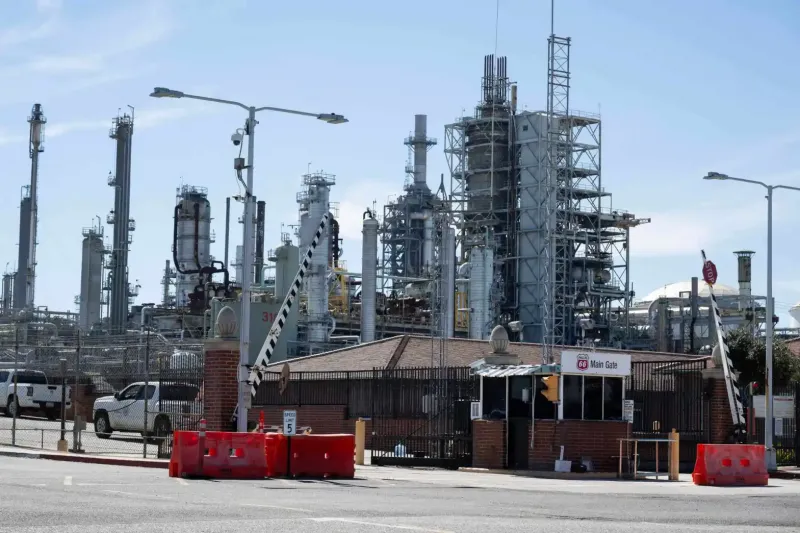
Don’t make taxpayers foot bill for closed oil refineries
By Senator Catherine S. Blakespear
California is leading the nation in building a cleaner energy future. We are accelerating the transition to zero-emission vehicles, investing in renewable energy and creating the technologies that will power our future.
But a responsible energy transition means more than building the new. It also means responsibly winding down the old. Data shows that refineries are closing and consolidating operations — around the world, around the nation and here in California.
In 1985, California hosted 40 refineries. Today, there are 11, with seven responsible for in-state gasoline production. There are many reasons for these closures, but the question is: What do the facilities owe to local communities and state taxpayers before, during and after they wind down?
That is where government has an important role to play. If we leave this transition entirely to companies that are motivated chiefly by their desire for profits, there are no guarantees they won’t walk away leaving California taxpayers holding the bag.
We have seen what happens when government is caught flat-footed. In Philadelphia, when the largest refinery on the East Coast closed, it went through a taxpayer bailout, bankruptcies, chronic understaffing and job losses, a catastrophic explosion, transfers of corporate ownership to new business entities and finally long-term taxpayer-funded environmental oversight.
California has taken steps to avoid a similar scenario by requiring refineries to provide one year’s notice of plans to close, to give workers, communities and government time to prepare.
But we need more than advance notice, we also need to know what will happen to the refinery property itself — and what cleaning it up will take. Many of the refineries left in California predate the Environmental Protection Agency itself. Refineries have been releasing contaminants into the soil, air and water for decades.
They may stop polluting when they close, but they can leave behind a big, expensive mess. For example, a recently closed refinery in Los Angeles has a 16-foot-deep contaminated soil layer beneath it.
These companies owe us more information. That is why I authored Senate Bill 1259.
It directs CalEPA to develop an overview of historical costs, methods and timelines associated with refinery decommissioning and remediation. Refiners would then provide the state with reports identifying the costs and obligations they expect if they close for the state’s review.
Importantly, SB 1259 does not create a new cleanup standard or a single additional cleanup requirement beyond what’s already on the books. It simply ensures that state and local governments are not operating in the dark.
Yet the oil industry has fiercely fought this basic level of transparency that is required in other sectors of the energy industry. Nuclear power plants, gas facilities, wind, solar and coal plants are all required to plan and secure funding for closures, despite not knowing when or if their facilities will close.
They must map out land remediation and set aside money to ensure taxpayers do not inherit the decontamination bill. They also must continuously evaluate and provide public access to their data about it.
No, the sky is not falling on oil refiners. SB 1259 is a modest, reasonable step toward accountability with disclosure requirements that are already followed in other parts of the energy industry. It asks a straightforward question: When the time comes to clean up, what is the plan?
The fact that oil companies are fighting hard against this disclosure raises troubling questions. What is it they don’t want us to know?
California’s clean-energy future is coming. Let’s be smart, thoughtful and responsible in how we approach it. SB 1259 creates the accountability and information sharing we need to protect workers, communities and the state during this energy transition.
This op-ed appeared in the San Diego Union-Tribune on Aug. 27, 2026