Sen. Blakespear Introduces Legislation to Increase Transparency for Oil Refinery Closures
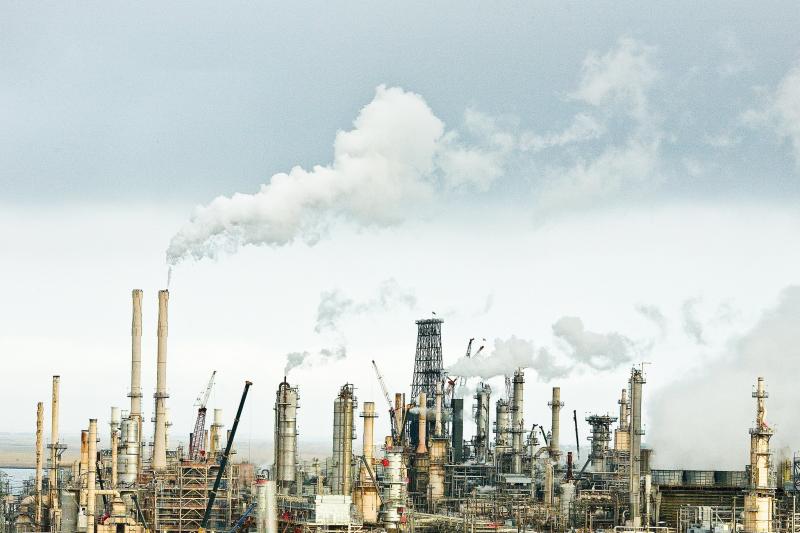
SACRAMENTO – Sen. Catherine S. Blakespear, D-Encinitas, has introduced legislation to give communities and state agencies a realistic picture of how refinery sites will be cleaned up – and the costs involved – if and when they close.
SB 1259 would direct the State Water Board to develop guidelines for estimating the costs and timelines for refinery decommissioning and remediation. The bill would then require oil refiners to submit reports to the state identifying the costs and obligations expected, should they close.
Over the past few decades, the U.S. petroleum refining sector has seen significant changes. While fuel demand has only modestly begun to decline, the country has seen refineries consolidate for decades, providing nearly the same refining capacity with roughly half the number of larger, more efficient refineries.
California has seen its share of refinery closures with seven remaining operational from the roughly 50 that were operating in the 1980s. Each closure has had significant real-world impacts on those who work in, live around, and depend on the refinery. This trend continues with the recent and planned closures of refineries in Los Angeles and Benicia.
“Refinery closures are extremely complex and impactful to California,” Sen. Blakespear said. “We need to know in advance of all the potential costs and consequences when oil refineries close so we can be prepared and limit the negative impact to communities, workers, local governments and the state as a whole.”
The Senate Environmental Quality Committee, which is chaired by Sen. Blakespear, held an informational hearing this week exploring the issues created by refinery closures that included testimony from California Energy Commission Vice Chair Siva Gunda. As the state continues to transition away from fossil fuel in coming years, Gunda encourages developing concurrent strategies to support near-term fuel supply, system-wide reliability and a holistic transition.
“There is a real concern that there might be gaps in understanding, both the liability that the state might carry and from the community standpoint,” Gunda told the committee. “Some of these assets could take many years to remediate and convert. How can they plan for the long-term benefits of the community? I don’t think there is an agreement that the information is here. The opportunity to be able to have that information for everybody to consume would be really helpful.”
SB 1259 helps communities, and the state, prepare and plan for these coming closures, instead of scrambling to respond only after finding out a closure is coming. By directing the State Water Board to establish standards and then requiring oil companies to disclose their financial obligations for decommissioning and remediation, the bill is one important piece in managing California’s transition to a carbon-free energy future.
The legislation is sponsored by the Asian Pacific Environmental Network (APEN) and Communities for a Better Environment. The two environmental justice organizations recently published a report titled “Before the Last Drop: Lessons from the Phillips 66 Los Angeles Refinery Closure.”
“As we transition away from fossil fuels, it is crucial that the state plan ahead for inevitable refinery closures, and that starts with transparency,” said Faraz Rizvi, APEN Policy and Campaign Manager. “Communities deserve to know how refineries plan to decommission and clean up their mess, as well as how much it will cost so that land can be revitalized for community uses. Unplanned refinery closures are deeply disruptive to communities, workers, and consumers, but by proactively planning, the state can give communities an opportunity to imagine a new future.”
Sen. Blakespear represents Senate District 38, which covers northern San Diego County and southern Orange County. To learn more about the district and Sen. Blakespear, visit her Senate website.